Precision Heat: The Physics of Thermal Stability
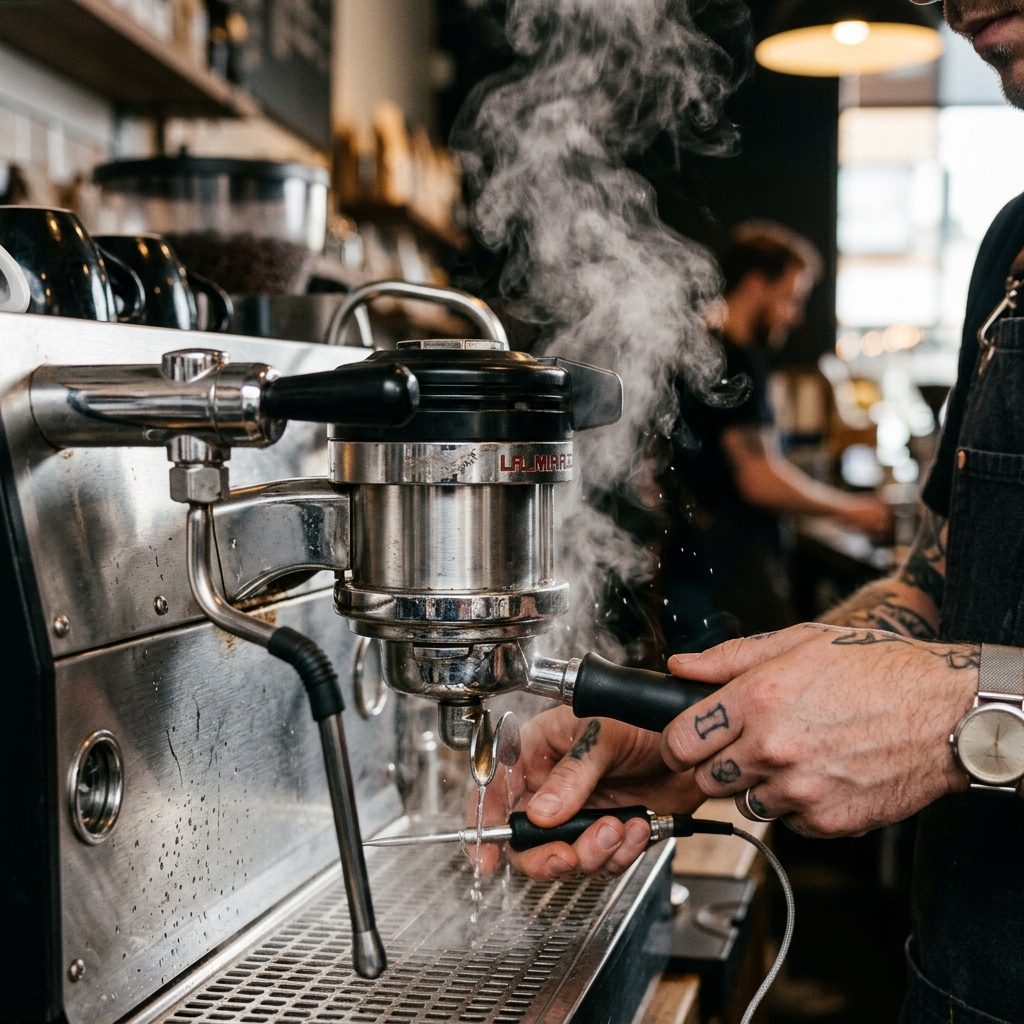
In the world of espresso, a variance of just one degree Celsius can be the difference between a syrupy, balanced shot and one that is unpleasantly bitter or sour. This 1,300-word technical breakdown explores the engineering required to achieve absolute thermal stability in high-end espresso machines.
The Thermodynamic Challenge of Espresso
Espresso extraction is a high-pressure, high-temperature event that takes place in a very short window of time—typically 25 to 35 seconds. During this window, water acts as the primary heat transfer fluid. The goal is to maintain a constant temperature (the "set point") as the water travels from the boiler, through the group head, and finally through the coffee puck. The challenge lies in the fact that water is constantly losing heat to its surroundings, and the act of brewing itself introduces cold water into the system to replace what is being used. Maintaining stability in this dynamic environment requires sophisticated engineering and a deep understanding of thermal mass.
The Evolution of Control: From Levers to PID
Early espresso machines, such as the iconic lever machines of the 1940s, relied on the thermal mass of heavy brass group heads to regulate temperature. A large chunk of metal would be heated by steam, and the water would be cooled to brewing temperature as it passed through the metal. This was effective for a few shots, but the group head would eventually overheat (thermal runaway) or cool down too much during a rush. The introduction of the E61 group head in 1961 used a thermosyphon system to constantly circulate hot water, keeping the group head warm. However, even the E61 was subject to fluctuations based on ambient temperature and usage frequency.
The real revolution came with the application of **PID (Proportional-Integral-Derivative)** controllers. A PID loop uses a mathematical algorithm to adjust the power sent to the heating element based on the difference between the current temperature and the set point. Unlike a traditional thermostat that simply clicks on and off, a PID controller pulses the heater at high frequency, allowing for temperature precision within 0.1 degrees Celsius. This technology transformed the espresso machine from a mechanical tool into a precision laboratory instrument.
Saturated vs. Semi-Saturated Group Heads
To eliminate the "temperature drop" that occurs as water moves from the boiler to the coffee, modern high-end machines (like La Marzocco and Slayer) use **Saturated Group Heads**. In this design, the group head is actually an extension of the boiler itself. Water is always present in the group head at the exact brewing temperature, meaning there is zero distance for the water to travel—and zero opportunity for it to lose heat. This creates the most stable thermal profile possible.
In contrast, **Semi-Saturated** or "Ring" group heads (often found in home machines like the Breville Dual Boiler) use a smaller reservoir of water or a separate heating element in the group head. While highly effective and much faster to heat up than a fully saturated system, they often lack the extreme thermal inertia required for high-volume commercial environments. Understanding the difference between these systems is crucial for any enthusiast looking to invest in a "prosumer" setup.
Thermal Mass vs. Rapid Heating: The Great Debate
There is currently a philosophical divide in espresso machine engineering. The "Traditional" school (represented by La Marzocco) believes in massive thermal inertia. By using large boilers and heavy stainless steel components, the machine becomes a "thermal flywheel"—once it reaches temperature, it is very hard to move. This ensures rock-solid stability during back-to-back shots in a busy cafe.
The "Modern" school (represented by Decent Espresso) uses low thermal mass and high-speed thermoblocks. These machines use sophisticated software to heat a tiny amount of water almost instantly. This allows the barista to actually *change* the temperature *during* the shot—a technique known as temperature profiling. For example, a barista might start a shot at 94°C to maximize acidity and then drop it to 90°C toward the end to prevent the extraction of bitter compounds. Both approaches have their merits, but they represent the cutting edge of thermodynamic application in coffee.
The Impact of Temperature on Extraction Kinetics
Why does temperature matter so much? At a molecular level, heat increases the solubility of the compounds within the coffee bean. Organic acids, which provide brightness and fruitiness, are relatively easy to dissolve and come out early in the shot. Sugars and heavier oils follow. Bitter alkaloids and astringent tannins require more energy to break their bonds with the coffee matrix.
If your water is too hot (e.g., 96°C+), you will over-extract these bitter compounds, resulting in a "burnt" or "ashy" flavor. If your water is too cold (e.g., 88°C-), you will fail to extract enough sugars to balance the acids, resulting in a "sour" and "salty" shot. Precise thermal stability ensures that every shot you pull has the exact same chemical composition, allowing you to "dial in" your grinder with total confidence.
Flash Boiling and Puck Integrity
An often-overlooked aspect of thermal stability is what happens when the water hits the dry coffee puck. If the water in the boiler is kept under high pressure at a temperature above 100°C (standard for heat-exchanger machines), it will "flash boil" as it enters the lower-pressure environment of the group head. This creates steam pockets that can disrupt the integrity of the puck, leading to **channeling**—where the water finds a path of least resistance and bypasses the majority of the coffee. A thermally stable machine ensures that the water is liquid and consistent from the first drop to the last, protecting the puck and ensuring an even extraction.
Conclusion: Precision as an Art Form
Thermal stability is the invisible foundation of great espresso. While the barista's technique and the quality of the beans are the stars of the show, the engineering of the machine is what makes their success repeatable. As technology continues to advance, we are seeing the lines between "home" and "professional" equipment blur, giving enthusiasts the power to explore the technical limits of extraction in their own kitchens. In our next blog installment, we will take a deep dive into the microbiology of **Anaerobic Fermentation** and how it is redefining the flavor potential of the raw coffee cherry.