Temperature Control: The Thermal Variable
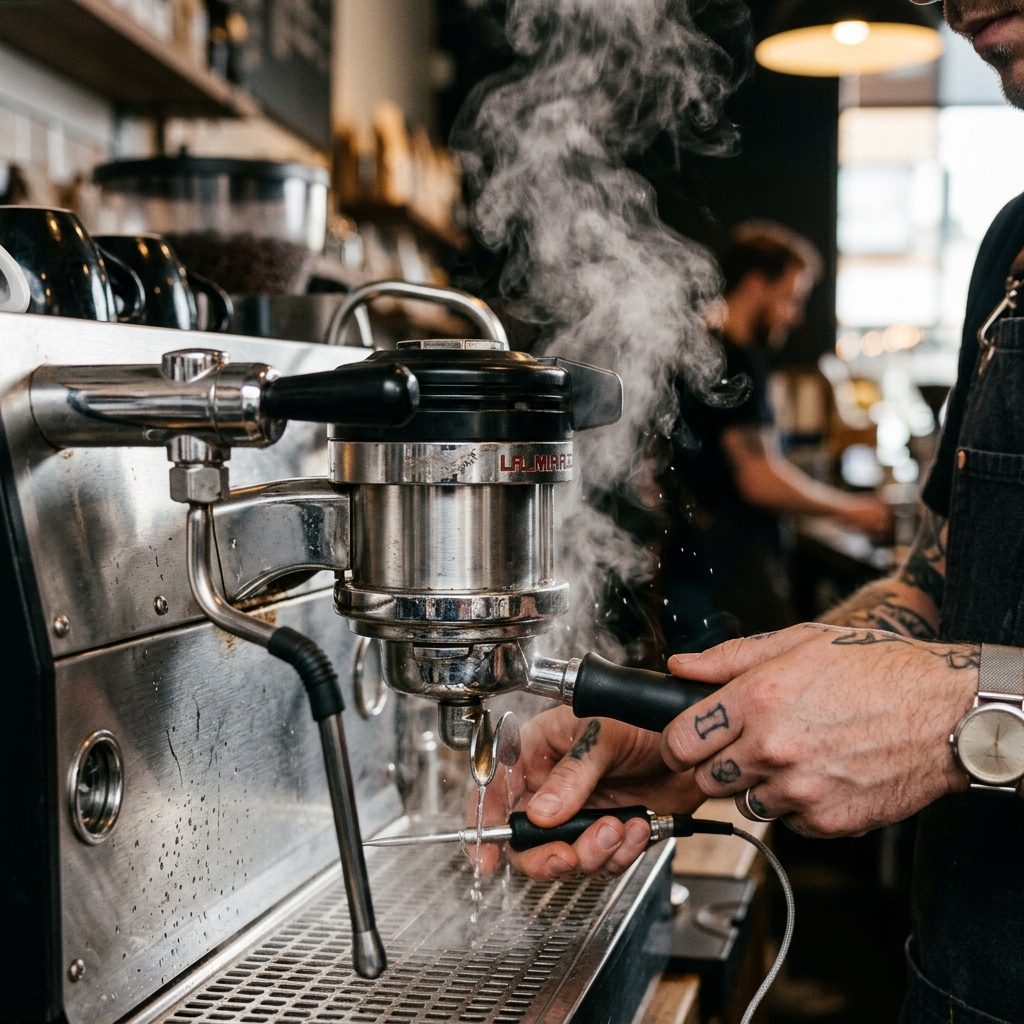
In the hierarchy of brewing variables, temperature is often the most misunderstood. While many focus on the "boiling water" myth, the reality of extraction is a delicate dance of thermal energy and molecular solubility. This 1,200-word analysis breaks down the physics of temperature management.
The Kinetic Energy of Extraction
Temperature is, at its most basic level, a measurement of the average kinetic energy of molecules. In coffee brewing, higher temperature water means faster-moving molecules. When these high-energy molecules collide with the ground coffee particles, they are more effective at breaking the chemical bonds that hold flavor compounds within the bean's cellulose structure.
However, extraction is not linear. Different compounds in coffee have different "solubility thresholds." Organic acids (the bright, fruity notes) are highly soluble and extract even at lower temperatures. Sugars and lipids (the sweetness and body) require more energy to dissolve. Finally, heavy polyphenols and bitter alkaloids (the astringency and "burnt" notes) only dissolve at the highest temperature ranges. Precise control is therefore about targeting the "sweet spot" while avoiding the bitter end of the spectrum.
The Roast-to-Temperature Matrix
One of the most critical concepts in specialty coffee is the inverse relationship between roast level and brewing temperature. As coffee is roasted longer, its physical structure becomes more porous and its chemical compounds more fragile. This means dark roasts are much easier to extract than light roasts.
- Light Roasts (92°C - 96°C / 198°F - 205°F): Because the cellular structure is dense and intact, you need high thermal energy to pull out the complex acids and sugars. Brew too cool, and the coffee will taste "sour" or "vegetal."
- Medium Roasts (88°C - 92°C / 190°F - 198°F): A balanced approach is needed to highlight the Maillard reaction products (caramel/chocolate) without over-extracting the acids.
- Dark Roasts (82°C - 88°C / 180°F - 190°F): The structure is highly porous and the oils are already on the surface. High heat will instantly extract bitter carbon notes. Lower temperatures allow the "heavy" sweetness to shine without the bite.
Thermal Stability and Slurry Temperature
It's important to distinguish between the kettle temperature and the slurry temperature (the temperature inside the brewer). As soon as water hits the coffee and the brewer (be it ceramic, glass, or plastic), it loses heat. Ceramic brewers, in particular, act as massive heat sinks if not properly pre-heated. A kettle set to 96°C might result in a slurry temperature of only 88°C.
For authoritative results, thermal stability is key. This is why high-end espresso machines use PID controllers and saturated group heads. For pour-over, using a plastic brewer (which has lower thermal conductivity than ceramic) or a double-walled glass brewer can help maintain a consistent extraction environment from start to finish.
The "Off-Boil" Paradox
While the common advice is to use water "just off the boil," this is a simplification. The atmospheric pressure and altitude of your kitchen will affect the boiling point. In Denver, water boils at 95°C (203°F)—which is actually the perfect temperature for a light roast. In Seattle, water boils at 100°C (212°F), which can be too aggressive for many coffees. Investing in a digital gooseneck kettle with degree-by-degree control is the single most important equipment upgrade for the precision brewer.
Conclusion: Precision as a Habit
Mastering temperature is about repeatability. By documenting your kettle temperature alongside your grind size and ratio, you move from "making coffee" to "engineering a profile." In our next guide, we will explore how to apply these thermal principles to the **Pour-Over Ritual**, focusing on the specific mechanics of the V60 and Kalita Wave.