Deciphering the Rate of Rise (RoR)
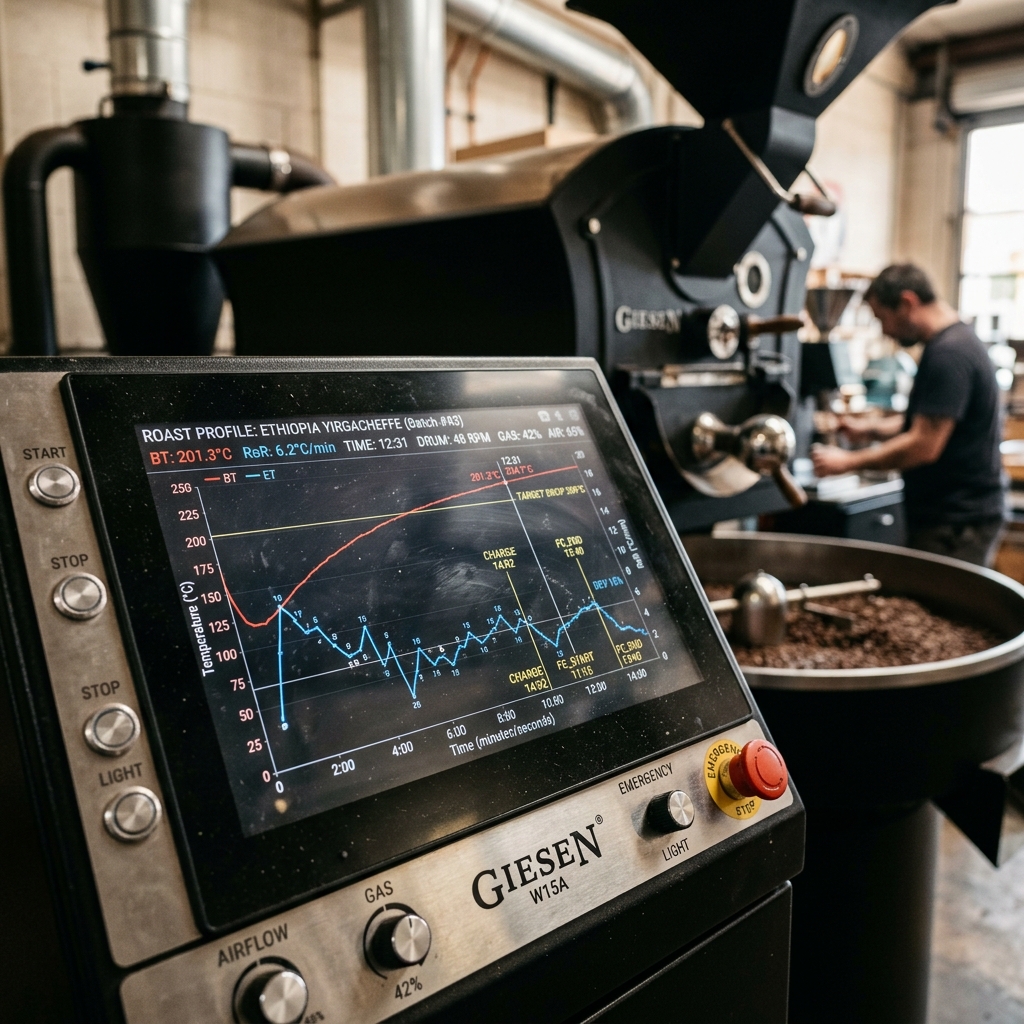
Roasting coffee is often described as an art, but at its core, it is a high-stakes game of thermodynamics. The "Rate of Rise" (RoR) is the single most important metric for any professional roaster seeking consistency and clarity. This 1,500-word masterclass breaks down the physics of the roasting curve and how to manage the energy of the drum.
What is Rate of Rise (RoR)?
In simple terms, the **Rate of Rise (RoR)** is the speed at which the temperature of the coffee beans is increasing at any given moment. It is typically measured in degrees per minute. If your beans are at 150°C and one minute later they are at 160°C, your RoR is 10°C/min. While the bean temperature (BT) tells you *where* you are in the roast, the RoR tells you *how fast* you are moving. Managing this speed is the key to unlocking a bean's potential and avoiding common defects like "stalling" or "scorching."
The Three Pillars of Heat Transfer
During a roast, heat is transferred to the beans via three primary mechanisms. Understanding the balance between these is the first step toward mastering the RoR curve:
- Conduction: Heat transfer through direct contact with the hot drum. This is most significant early in the roast (the Drying Phase) and can lead to "tipping" if the drum is too hot.
- Convection: Heat transfer through the flow of hot air. This is the most efficient and controllable form of heat in modern roasting. A higher percentage of convection usually leads to a cleaner, more vibrant cup.
- Radiation: Heat emitted from the inner surfaces of the roaster. While less significant than the first two, it contributes to the overall "thermal momentum" of the machine.
The Anatomy of the Curve: From Charge to Drop
A professional roast curve is generally divided into several critical phases, each with its own RoR objectives:
1. The Drying Phase (Charge to Turning Point)
When you "charge" the roaster (drop the room-temperature beans into the hot drum), the temperature of the probe will immediately plummet. The "Turning Point" is the moment when the probe and the beans reach thermal equilibrium and the temperature begins to rise. During this phase, the RoR should be high. The goal is to drive out the internal moisture of the bean efficiently. If the RoR is too low here, the roast will "bake," leading to a flat, bread-like flavor profile.
2. The Maillard Reaction (Yellowing to First Crack)
As the beans turn from green to yellow, the complex chemical dance of the Maillard reaction begins. Amino acids and reducing sugars react to create hundreds of flavor and color compounds. During this phase, the RoR should begin to gradually decline. This is known as a **Constantly Declining RoR**. If the RoR stays too high, you risk rushing through these critical chemical reactions, resulting in a cup that lacks complexity and sweetness.
3. First Crack and Development
The "First Crack" is the moment when the internal steam pressure within the bean becomes so great that the cellulose structure actually ruptures. This is an **exothermic** event, meaning the beans themselves begin to release heat. This creates the most dangerous moment in roasting: the "Flick." As the beans release heat, the RoR will suddenly spike. If the roaster doesn't anticipate this and reduce the gas or air temperature beforehand, the spike will "crash" the roast afterward, resulting in "baked" or "ashy" flavors. Managing this transition requires millisecond-perfect timing and a deep familiarity with your machine's thermal lag.
The "Flick and Crash" Phenomenon
The "Flick and Crash" is the nemesis of specialty roasting. A "Flick" toward the end of the roast (usually just after First Crack) causes the sugars to caramelize too quickly, leading to a loss of terroir clarity. The subsequent "Crash" (where the RoR drops near zero) creates a "baked" defect, which presents as a lack of acidity and a dusty, flat finish. A master roaster uses software like Cropster or Artisan to visualize these micro-trends in real-time, making tiny adjustments to gas and airflow to ensure a smooth, beautiful curve that declines gracefully until the moment of "Drop."
RoR and Sensory Outcomes: Acidity vs. Body
By manipulating the RoR, a roaster can actually "shape" the flavor of the coffee. A faster RoR during the Maillard phase generally preserves more of the delicate organic acids (citric and malic), resulting in a bright, "sparkling" acidity. A slower, more extended Maillard phase allows for more body and sweetness to develop, as the sugars have more time to break down into complex caramel and chocolate notes. This is why a roaster might use a different RoR strategy for an Ethiopian Yirgacheffe (favoring brightness) than they would for a Brazilian pulp-natural (favoring chocolate and body).
Conclusion: Data-Driven Mastery
In the modern era, roasting is no longer a matter of "smell and sight." It is a data-driven discipline. The ability to read, interpret, and manipulate the RoR curve is what separates the enthusiasts from the authorities. By mastering the physics of heat transfer and the chemistry of the Maillard reaction, we can ensure that every bag of coffee we produce is a perfect expression of its origin. In our next blog entry, we will return to the "Brew Bar" to discuss the **Mathematics of Extraction Yield** and the role of the refractometer in professional quality control.