Roast Levels Decoded: The Science of Color & Flavor
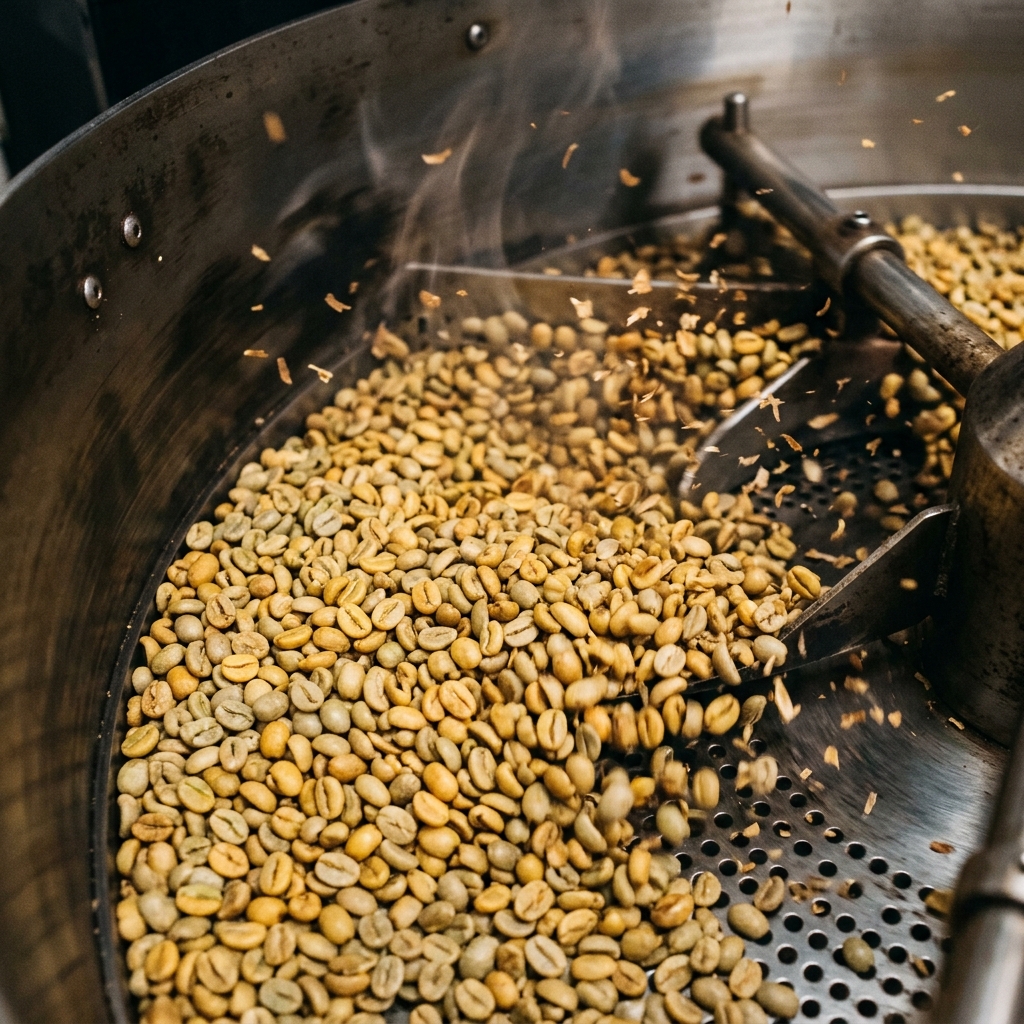
In the specialty coffee industry, names like "Full City" or "French Roast" are often used loosely. However, for the precision roaster, roast level is a measurable variable defined by **internal bean temperature** and **surface colorimetry**. This analysis breaks down the roasting spectrum through the lens of thermodynamics and chemical development.
The Light Side: Cinnamon and City Roasts
Light roasts are dropped shortly after the onset of "First Crack," typically between 196°C and 205°C (385°F - 401°F). At this stage, the bean's cellular structure is still relatively dense, and the original **terroir** (origin characteristics) is most prominent. "Cinnamon" roasts—named for their color, not their flavor—are often extremely acidic and can taste grassy if the Maillard reaction wasn't sufficiently developed. "City" roasts provide a better balance, allowing the bright citric and floral notes of high-altitude beans to shine while introducing subtle sweetness.
The Middle Ground: Full City and Beyond
A "Full City" roast is typically dropped just before the onset of the "Second Crack," around 210°C to 215°C (410°F - 419°F). At this stage, caramelization has overtaken the Maillard reaction as the primary flavor driver. The acidity begins to soften, replaced by heavy notes of chocolate, toasted nuts, and stone fruit. This is often considered the "sweet spot" for many single-origin espressos, as it provides enough body to cut through milk while retaining the bean's unique character.
The Dark Side: Vienna and French Roasts
Once a roast enters the "Second Crack," the beans begin to release oils as the internal cellular walls shatter under the pressure of CO2. Vienna roasts (220°C) and French roasts (225°C+) are defined by their oily surface and bittersweet, smoky profile. At this level, the origin characteristics are almost entirely eclipsed by the flavors of the roasting process itself. While popular in traditional espresso culture, dark roasts require extreme care to avoid "carbonization," where the beans turn into charcoal and lose all aromatic complexity.
Colorimetry: The Agtron Scale
To achieve absolute consistency, professional roasters use an **Agtron spectrophotometer**. This device measures the amount of infrared light reflected by the ground coffee, providing a numerical value (the Agtron number). A lower number indicates a darker roast. By targeting a specific Agtron value for both the whole bean and the ground coffee, roasters can ensure that the "development" of the bean's core matches its exterior.
Conclusion: Precision in Development
Roast level is not a destination; it is a point on a curve. The roaster's job is to identify the exact temperature and color that unlocks a specific bean's potential. Whether you prefer the bright acidity of a light roast or the deep richness of a dark roast, the science remains the same: it's all about controlling the heat transfer. In our next article, we move to the brew bar to explore **The Chemex Ritual: Filtration, Clarity, and Design**.