Immersion vs. Percolation: Clarity vs. Body
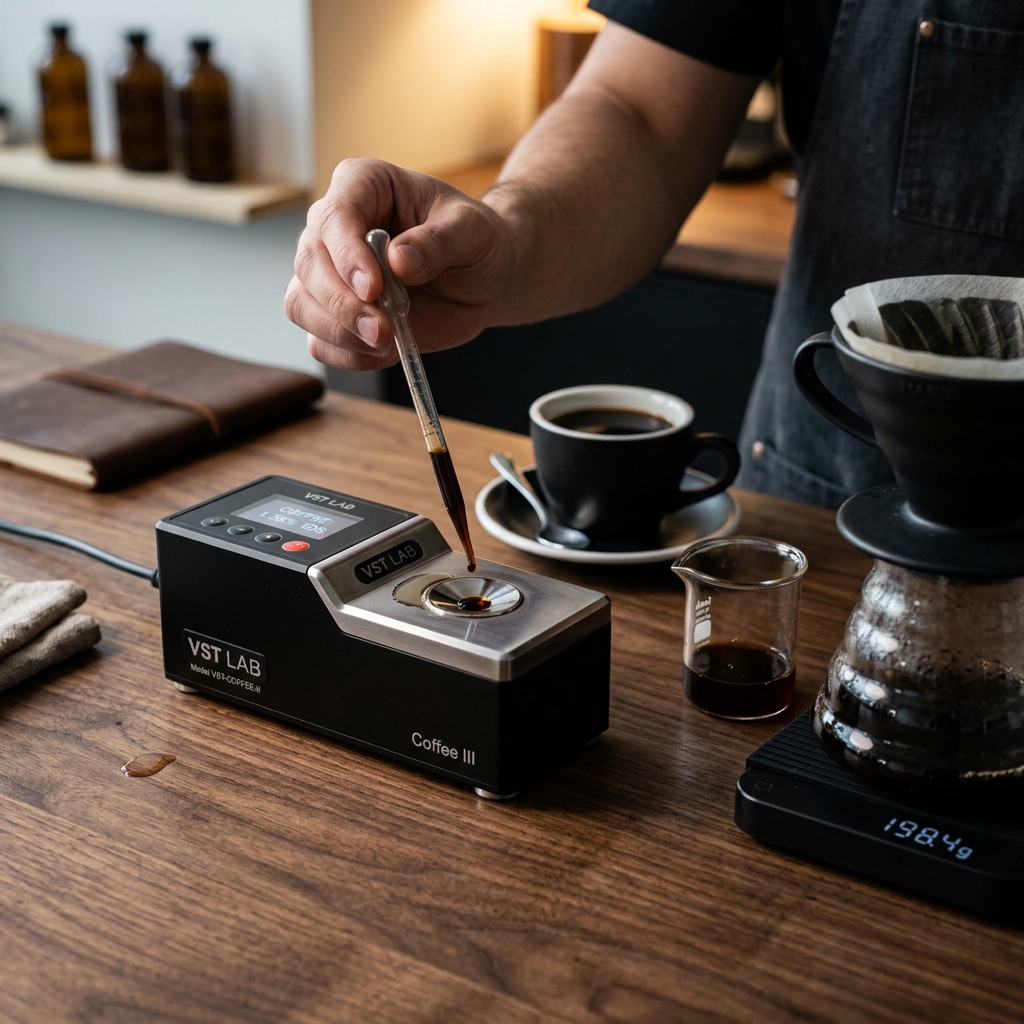
Every brewing method falls into one of two categories: Immersion or Percolation. While the goal—dissolving coffee solids into water—is the same, the underlying physics are fundamentally different. This 1,300-word analysis explores the concentration gradients and diffusion mechanics of both methods.
Immersion: The Power of Diffusion
In immersion methods (French Press, Clever Dripper, AeroPress immersion), the coffee grounds and water stay together for the entire brew duration. The primary driver of extraction here is **diffusion**. As the water dissolves the coffee compounds, the concentration of solids in the liquid increases. As the liquid becomes more saturated, the rate of extraction slows down. This is known as a "decreasing concentration gradient."
The result is a very "forgiving" brew. Because the extraction slows as the water saturates, it's difficult to wildly over-extract. Immersion coffees are characterized by a heavy mouthfeel and a cohesive, "rounded" flavor profile. However, because the water is not being replenished, it can be harder to achieve the sparkling clarity found in percolation methods.
Percolation: The Concentration Gradient
Percolation (V60, Chemex, Espresso) involves water passing through a bed of coffee. Unlike immersion, percolation constantly introduces **fresh, unsaturated water** to the grounds. This maintains a "high concentration gradient" throughout the entire brew. Fresh water is a much more aggressive solvent than water already containing dissolved solids.
This high gradient makes percolation incredibly efficient at extracting delicate, high-note aromatics and acids. It also makes it much easier to over-extract. If your grind is too fine, the fresh water will eventually pull out the heavy, bitter tannins that immersion water might leave behind. The hallmark of percolation is clarity—the ability to taste individual flavor notes with precision.
Turbulence and Channeling
A key risk in percolation that doesn't exist in immersion is **channeling**. Because water is flowing through the grounds, it will always seek the path of least resistance. if the coffee bed is not uniform, the water will "channel" through certain areas, over-extracting them while leaving other areas under-extracted. In immersion, the grounds are surrounded by water, so the extraction is inherently more uniform.
Which to Choose?
The choice depends on the bean and your palate. High-clarity, light-roasted Ethiopians often shine in percolation (V60), where their floral notes are highlighted. Heavier, chocolatey Brazils or Sumatrans often benefit from the body and sweetness of a French Press immersion. Understanding the physics of how the water moves allows you to choose the right tool for the specific bean in your hand.
Conclusion: Precision in Choice
Whether you prefer the diffusion-led sweetness of immersion or the gradient-driven clarity of percolation, understanding the underlying physics is the first step toward mastery. In our next article, we will examine the final barrier between the bean and the cup: **The Filter Factor**.