The Chemistry of the Maillard Reaction
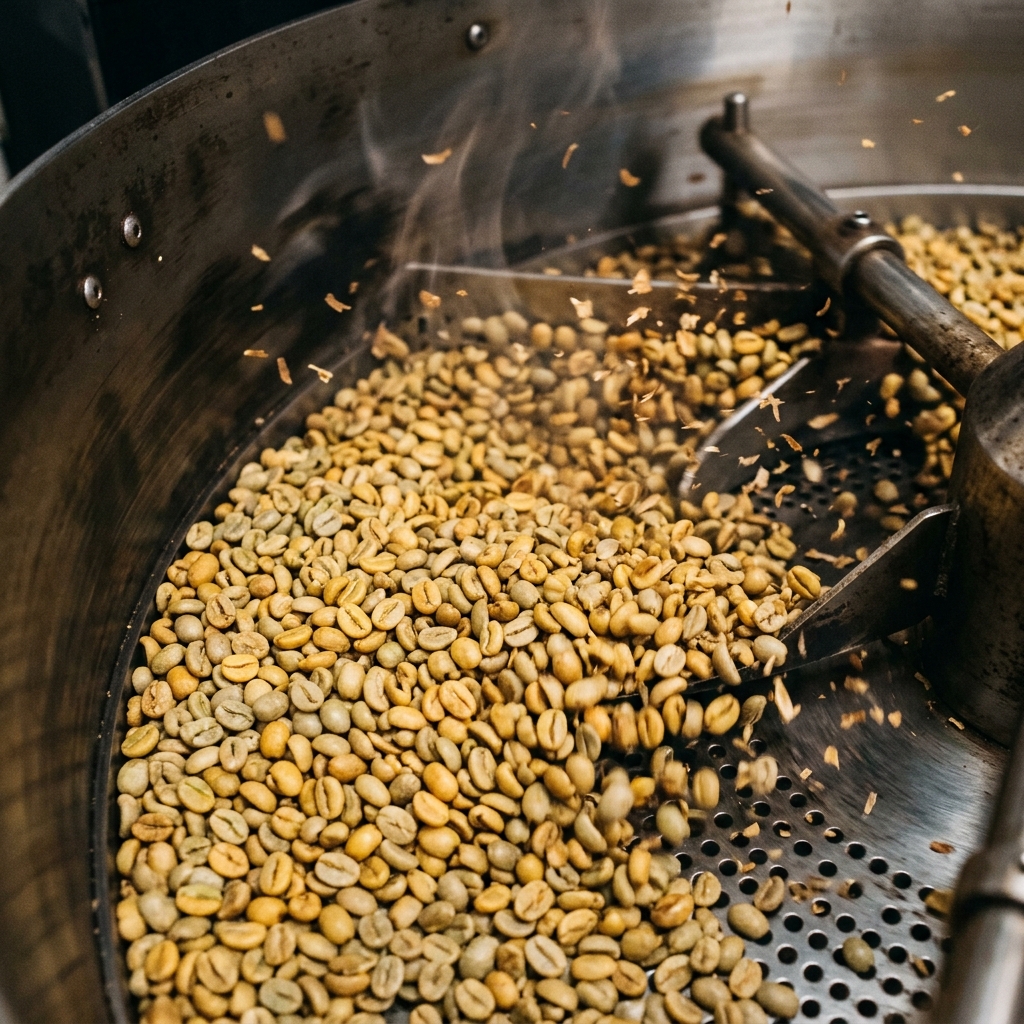
Green coffee seeds have almost no aroma. They are dense, grassy, and acidic. The magic of coffee happens in the roaster, where a series of complex chemical reactions transform these inert seeds into the most aromatic substance on earth. At the heart of this transformation is the **Maillard Reaction**. This 1,500-word analysis explores the molecular changes that occur during roasting.
What is the Maillard Reaction?
Named after French chemist Louis-Camille Maillard, who first described it in 1912, the Maillard reaction is a form of non-enzymatic browning. It occurs when **reducing sugars** (like glucose and fructose) react with **amino acids** (the building blocks of proteins) under heat. In coffee roasting, this reaction typically begins around 140°C (284°F) and continues until the onset of "First Crack" (around 196°C).
Unlike caramelization, which involves only sugars, the Maillard reaction produces thousands of different aromatic compounds. These include furans (caramel-like), pyrazines (nutty/roasted), and thiols (roasted/meaty). The complexity of coffee—which contains over 800 volatile aromatic compounds—is largely a result of this reaction.
The Role of Melanoidins
One of the most important products of the Maillard reaction is a group of brown, nitrogenous polymers called **Melanoidins**. These molecules are responsible for the color of roasted coffee and, more importantly, its **body** and mouthfeel. Melanoidins are also powerful antioxidants and have been shown to have anti-inflammatory properties. In the cup, they contribute to the "viscosity" and long-lasting finish that defines a high-quality roast.
Strecker Degradation: The Aroma Generator
As the Maillard reaction progresses, it triggers a secondary process called **Strecker Degradation**. This involves the reaction of dicarbonyl compounds (intermediate products of the Maillard reaction) with amino acids to produce **aldehydes**. These aldehydes are the primary drivers of coffee's characteristic aroma. For example, the degradation of the amino acid Leucine produces 3-methylbutanal, which smells intensely of chocolate and malt.
Temperature and Time: The Roaster's Control
A master roaster uses the "Rate of Rise" (RoR) to control the duration of the Maillard phase. If the Maillard phase is too short, the coffee will lack complexity and body, tasting "thin" or "under-developed." If it is too long, the delicate acids and sugars will be destroyed, resulting in a flat, "baked" flavor profile.
Typically, specialty roasters aim for a Maillard phase that lasts between 3 and 5 minutes. During this time, the beans lose moisture, turn from yellow to golden brown, and begin to expand. Monitoring the specific temperature at which "Yellowing" occurs (usually around 150°C) is a critical data point for ensuring batch-to-batch consistency.
Caramelization: The Final Act
As the temperature climbs above 170°C, a second browning reaction begins: **Caramelization**. Unlike Maillard, this involves the thermal decomposition of sugars alone. Caramelization produces the heavier, sweeter notes of butterscotch and caramel, but it also produces bitterness. The roaster's challenge is to balance the complex aromatics of the Maillard reaction with the sweetness of caramelization without crossing into the "carbonization" (burning) phase.
Conclusion: The Science of Sensory Excellence
Understanding the Maillard reaction shifts the perspective of roasting from a craft to a science. By manipulating heat and airflow, we are performing complex molecular engineering. Every batch of coffee is a testament to the precision of these reactions. In our next installment, we move from the roaster to the espresso machine to explore **The Science of Espresso Puck Prep and the Physics of Distribution**.