Anaerobic Fermentation: A Scientific Breakdown
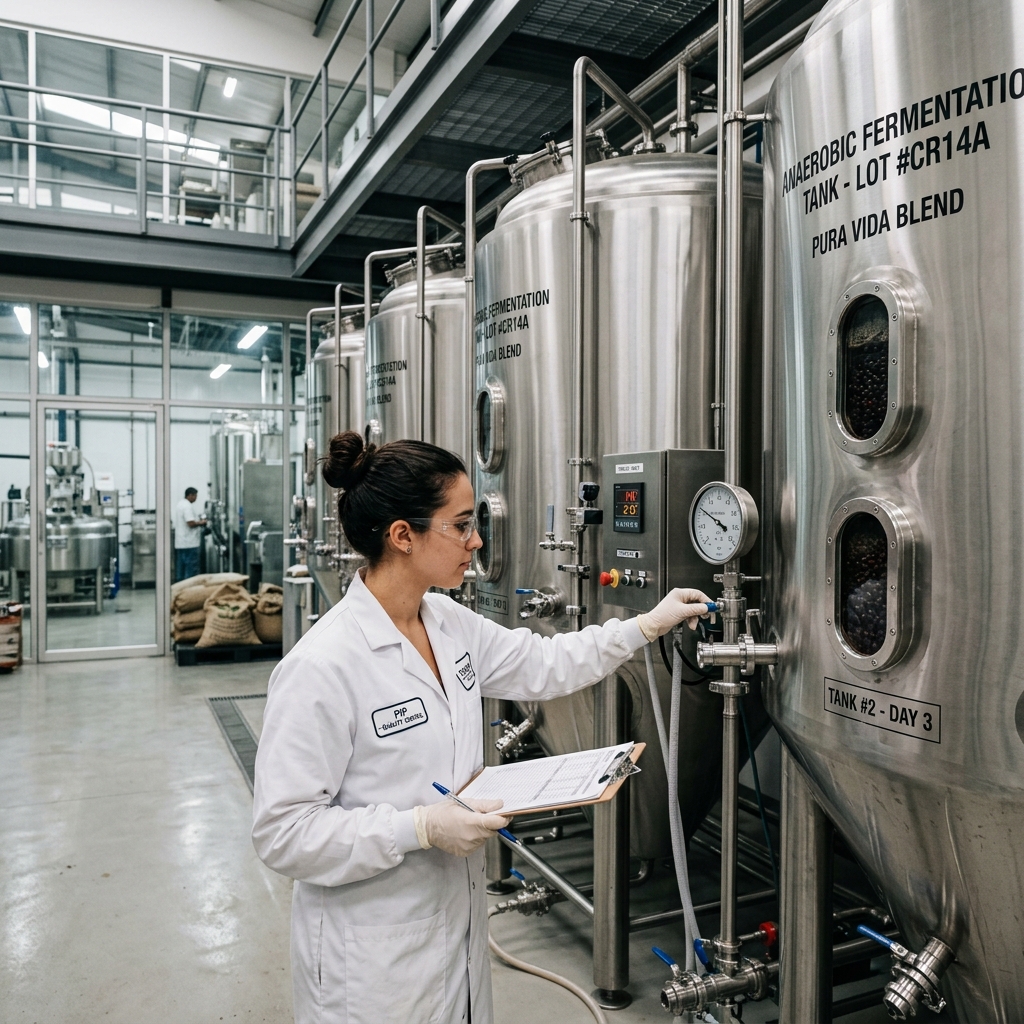
In the last five years, "Anaerobic Fermentation" has moved from an experimental curiosity to a mainstay of the specialty coffee world. But beneath the "boozy" and "tropical" marketing terms lies a complex microbiological process that is redefining the potential of the coffee seed. This 1,400-word deep dive explores the chemical pathways of oxygen-free fermentation.
Defining the Anaerobic Environment
All coffee undergoes some form of fermentation. Even in traditional washed processing, the mucilage surrounding the bean is broken down by wild yeasts and bacteria. However, this typically happens in open-air tanks where oxygen is abundant. **Anaerobic Fermentation** (from the Greek *an-* meaning without, and *aer* meaning air) involves placing the coffee cherries or depulped beans into sealed stainless steel tanks, which are then purged of oxygen—often using a one-way valve that allows CO2 (a byproduct of fermentation) to escape while preventing O2 from entering.
By removing oxygen, the processor completely shifts the microbial landscape. Aerobic bacteria and yeasts are suppressed, allowing anaerobic specialists—primarily **Lactic Acid Bacteria (LAB)**—to dominate the environment. This shift is the fundamental driver behind the unique flavor profiles associated with this process.
The Microbiology of Flavor Precursors
Fermentation is not just about breaking down sugars; it is a bio-factory for flavor precursors. As LAB consume the fructose and glucose in the coffee mucilage, they produce a variety of secondary metabolites. The most significant of these is **Lactic Acid**. Unlike acetic acid (found in vinegar and often associated with "over-fermented" coffee), lactic acid is mild and creamy. When it penetrates the cellular structure of the coffee bean, it contributes to a denser, more velvety mouthfeel.
In addition to acids, anaerobic fermentation encourages the production of **esters**. Esters are volatile aromatic compounds formed by the reaction of alcohols and acids. In an anaerobic environment, the slower, cooler fermentation process allows for a higher concentration of long-chain esters, which translate to "tropical fruit" notes like pineapple, passionfruit, and mango in the final cup. This is a departure from the simple "berry" or "citrus" notes found in traditional processing.
Thermodynamics and Pressure in the Tank
Control is the hallmark of the anaerobic process. Most professional processing facilities monitor two key variables during the fermentation window: **Temperature** and **pH**. Because the tanks are sealed, the heat generated by microbial activity is trapped. If the temperature rises too high (above 30°C), the fermentation can become "wild," leading to the production of butyric acid (which smells like rancid butter). High-end producers often submerge their fermentation tanks in cool water baths to maintain a steady 18-20°C, slowing the process down to 72 or even 120 hours.
Pressure also plays a fascinating role. As the microbes produce CO2, the internal pressure of the tank rises. Some researchers believe this pressure actually helps to "force" the fermentation juices and aromatic compounds into the porous structure of the coffee seed. This is known as **Carbonic Maceration**, a term borrowed from the wine industry (specifically Beaujolais). The result is a bean that is "saturated" with flavor precursors before it ever hits the drying bed.
The Impact on Physical Seed Structure
One of the less-discussed aspects of anaerobic fermentation is how it affects the physical properties of the bean. The prolonged exposure to acidic environments and high pressure slightly alters the cellulose matrix of the coffee seed. When these beans are roasted, they often behave differently than traditionally processed coffee. They tend to be more "fragile" and react more quickly to heat. Roasters must adjust their profiles, often using lower charge temperatures and more gentle heat application to avoid "scorching" the delicate sugars that have been concentrated within the bean.
The Sensory Landscape: Boozy, Balsamic, and Beyond
From a sensory perspective, anaerobic coffees are polarizing. For some, the intense acidity and "funky" notes are the pinnacle of specialty coffee. For others, they can feel "engineered" or "artificial." Typical characteristics include:
- Acidity: Tartaric and Lactic. More like Greek yogurt or sparkling wine than citrus.
- Aromatics: Intense florals, cinnamon, and "boozy" notes like rum or bourbon.
- Mouthfeel: Heavy, syrupy, and often "lingering."
As the industry matures, we are seeing a move toward "Integrated Fermentation," where anaerobic stages are combined with traditional washed or natural drying to create more balanced, "elegant" cups that maintain clarity while benefiting from the complexity of the anaerobic phase.
Conclusion: Precision as the New Standard
Anaerobic fermentation represents a shift in the coffee industry from "observing" nature to "directing" it. By applying scientific principles to the processing stage, farmers are no longer at the mercy of wild microbial populations. Instead, they can craft specific flavor profiles with the precision of a master brewer. In our next installment, we will move from the processing tank to the roasting drum, exploring the **Physics of the Roasting Curve** and the critical importance of the Rate of Rise (RoR).